
POST WAR CHANGES TRANSFORMED ROYAL DORNOCH
RECENT years have witnessed another chapter in the evolution of Royal Dornoch Golf Club’s celebrated Championship Course.
The re-aligned 8th hole, “Dunrobin,” was officially unveiled at the start of the season, following on from well-received changes to the 7th, “Pier,” which was officially opened by 1999 Open champion Paul Lawrie.
It heralded the culmination of a carefully plotted strategy mapped out to future proof the world-famous links.
But, as general manager Neil Hampton, observes, the Highland club has never shied away from taking measures designed to ensure the Championship – and Struie – challenges continue to present an enjoyable and testing examination for golfers of all standards.
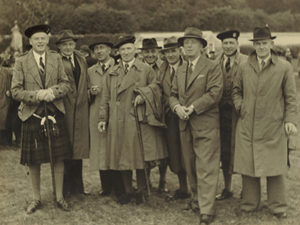
Neil noted that on Saturday, August 12 – a day traditionally associated with the opening of the grouse shooting season in Scotland – the club marks the 75th anniversary of a major reconstruction project which proved hugely influential in creating the Championship Course relished by contemporary golfers lured from around the globe.
Much of the links had been requisitioned by the RAF during the war years and, inevitably, that had taken its toll.
While the 1920 Open champion George Duncan made a brief foray north to Dornoch, armed with a pile of bamboo sticks to map out a potential lay-out, club historian John Macleod suggested long-time head greenkeeper (and later professional) Robbie Grant had already proposed extending the course over the hill towards Embo and returning on the lower level of the links.
“A common thread running through the generations entrusted with protecting and enhancing our marvelous links has been a single-minded determination to hand it on in fine shape for the next generation,” said Neil.
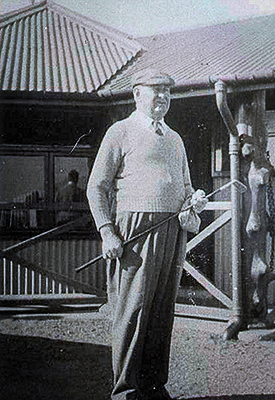
“The extensive changes made to the Championship Course in the wake of the Second World War created a remarkable legacy and undoubtedly contributed hugely to the reputation Royal Dornoch enjoys today.”
The opening ceremony saw club president the Duke of Sutherland invited to dispatch the opening drive, with the club’s Council of Management minutes noting that posters had been ordered advertising an opening exhibition match featuring top talents from Scotland and England.
The Duke of Sutherland, club captain Horace D. Bright and the players, the captains of the golf clubs in Brora, Golspie and Tain, Provost McDonald, Major Sinclair from Golspie, club Council and office bearers all enjoyed hospitality after the match at the Royal Golf Hotel.
The 2/6d admission price allowed golf fans of the day to see how Scottish international J.C Wilson and Ryder Cup player James Adams fared against both the reconstructed course and English rivals Leonard Crawley, a Walker Cup man and golf correspondent for the “Daily Telegraph,” and another Ryder Cup player, Charles Ward.
The players were hosted at fairytale Dunrobin Castle by the Duke and the outcome of the exhibition match was a 2 and 1 victory for the English duo.