


SIXTY YEARS ON FROM “NORTH TO THE LINKS OF DORNOCH”
ON June 6, 1964, an influential American publication carried a lengthy dispatch from one of golf’s most revered writers.
“The Sporting Scene” of “The New Yorker” delves deep into the chosen subject matter, be it baseball, basketball, boxing or football (generally Uncle Sam’s version).
On this occasion, renowned New England based Herb Warren Wind, who had coined the term “Amen Corner” in a 1958 “Sports Illustrated” article for the series of nerve-jangling holes at the Augusta National, reflected on a memorable sojourn to Scotland.
Sixty years later, “North to the Links of Dornoch” is regarded as one of the more influential factors in transforming the ailing fortunes of a Highland golf club which had largely slipped off the international radar.
While Wind had already enjoyed a dozen visits to Scotland during a “misspent adulthood,” friends in “The Home of Golf” had taken him to task for never venturing beyond the clusters of celebrated courses which, invariably, played host to Open Championships.
Newspaperman and former Walker Cup competitor Sam McKinlay suggested Wind should be adding the likes of Cruden Bay, Blairgowrie, Machrihanish, Nairn and, of course, Royal Dornoch, to his inventory.
The subsequent, evocative travelogue tracing a path from Glasgow through Perthshire and the Grampians to take to the links at Nairn and Royal Dornoch influenced a new generation of golf writers, and the ripple effect created a timely reminder of the classic courses to be found beyond Scotland’s Central Belt.
Wind himself credited USGA president Richard Tufts, of Pinehurst renown, for singing the praises of Royal Dornoch, which he had visited to see for himself the landscape which heavily influenced local lad and legendary golf course architect Donald Ross.
“For over half a century it has been regarded as one of the outstanding courses in the world by men close to the heart of the game, yet very few of them have ever played it,” observed Wind.
The friends’ only company that Saturday morning as they wandered over to the first tee was a large, one-eyed grey cat, known to members as Nelson.
Herb said the professional (sic) Jimmy MacDonald had drafted his 10-year-old grandson to caddy.
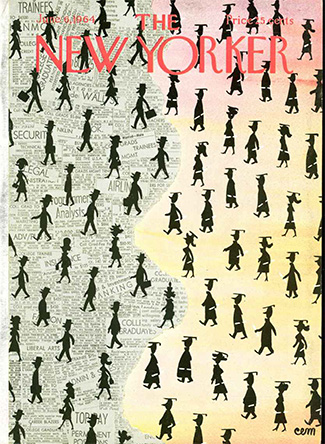
Royal Dornoch life member Christine Murray, who was brought up in the clubhouse where her father Jimmy was the steward (rather than the professional), recalls a copy of “The New Yorker” being dispatched from America by her cousin Janie.
“The daughter of my uncle Bill, Janie lived in Springfield, Illinois, where her father was a professional.
“She was terribly excited about the article, more because Nelson the cat was mentioned than because it was singing the praises of the golf club!
“Nelson was a stray who adopted us. He often accompanied me if I was going out for a few holes but he’d turn back to the clubhouse halfway up the first fairway.
“I think Herb had visited in 1963 at a quiet time. It was very different from today when caddies are booked well in advance.
“It was actually my father who suggested young Michael Milne could step in to push a trolley for Herb. Michael was the grandson of our former long-time pro Danny McCulloch.”
There have been many references to Herb’s essay down the years and how influential it was in restoring the fortunes of the golf club, along with later visits from Tom Watson and Ben Crenshaw.”
Wind’s essay touches on the history of both the town and golf club, and the legacy created by Old Tom Morris and long-time secretary John Sutherland.
He declared the terrain “beautiful golf country,” drawing favourable comparisons with St Andrews and the Augusta National, flagging-up the “crown greens,” mounds, slopes and run-offs which Ross sought to emulate at his masterpiece, Pinehurst No 2.
The celebrated bunker free 14th, “Foxy,” was identified as the stand-out hole on the Championship Course, epitomising its “originality and appeal.”
Denied an opportunity to play on the then strictly enforced Sabbath, Wind and McKinlay settled for a Monday walk over the links after an enjoyable foray to Golspie.
Wind declared: “I found Dornoch all I had hoped it would be – a thoroughly modern old links with that rare equipoise of charm and character that only the great courses possess.”
Neil Hampton, general manager of Royal Dornoch Golf Club, confirms Wind’s “New Yorker” article is rightly regarded as a cornerstone in re-establishing the course’s reputation as one of the finest in world golf.
“Herb’s essay was hugely influential in encouraging American golfers, in particular, to contemplate visiting Royal Dornoch and the home of Donald Ross during trips to Scotland.
“Herb also declared that ‘no golfer has completed his education until he has played and studied Royal Dornoch.’
“The club’s gratitude for his role in reintroducing Royal Dornoch to the wider golfing world was acknowledged formally in 1991 when Herb was granted honorary membership.”